Ethics in Science Research

Date: 2025-12-26
Category: Ethical Concerns
Introduction
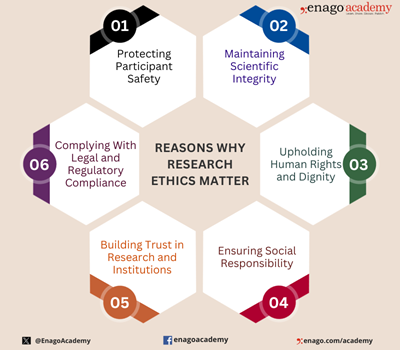
Ethics in science research refers to the principles and standards that guide how scientific inquiry is conducted - from the earliest stages of study design to the communication of results. Ethical practice is essential not only for protecting research participants, but for ensuring the credibility and integrity of the scientific process.
"Ethics and Science need to shake hands."
At its core, research ethics emphasizes honesty, transparency, accountability, and respect. These principles help ensure that scientific findings are reliable and that the methods used to obtain them are fair and responsible. A global review of research ethics highlights that ethical conduct is central to maintaining the credibility and societal relevance of science, particularly as research increasingly intersects with public policy and global challenges.
Common ethical issues include informed consent, data manipulation, plagiarism, conflicts of interest, and the misuse of research with dual-use potential - work that could be applied for both beneficial and harmful purposes. Ethical lapses in any of these areas can undermine scientific integrity and erode public confidence. For example, data fabrication or selective reporting can distort the scientific record, while undisclosed conflicts of interest can cast doubt on the motivations behind research findings.
Institutions play a critical role in upholding ethical standards. Many universities, government agencies, and professional organizations have developed codes of conduct, ethics committees, and oversight mechanisms to guide researchers and address misconduct. These structures help ensure that research involving humans or sensitive data is reviewed carefully and that risks are minimized. As one source notes, the widespread adoption of ethical guidelines reflects the growing recognition of ethics as a cornerstone of responsible research practice.
Despite these frameworks, challenges remain. Studies point to a lack of standardized approaches for detecting misconduct, uneven training in research ethics, and persistent ambiguity around what constitutes an ethical violation. Addressing these gaps requires stronger education, more transparent data practices, and collaborative efforts to promote open science and accountability.
Ultimately, ethics in science research is not a static checklist but an ongoing commitment. As scientific capabilities expand - from genomics to artificial intelligence - the ethical landscape becomes more complex. Ensuring that research is conducted responsibly is essential not only for advancing knowledge but also for safeguarding the public good.