Why Advocate for Science?

Date: 2025-12-30
Category: Science Advocacy
Introduction
Sometimes silence and apathy are not neutrality - it is abdication. When public health is undermined, when the environment is threatened, when scientific consensus is ignored for political gain, advocacy becomes a moral imperative.
"Science is more essential for our prosperity, our security, our health, our environment, and our quality of life than it has ever been before."
In a world increasingly shaped by scientific knowledge - climate change, public health, AI, energy, biotechnology - it may seem natural that science should inform public policy. Yet paradoxically, science is often sidelined, misunderstood, or politicized in the very arenas where it is most needed. From vaccine resistance to climate denial, from the defunding of research to the suppression of data, the evidence-based voice of science is under threat. Against this backdrop, a growing number of scientists are stepping out of the lab and into the public square - not just to educate, but to advocate.
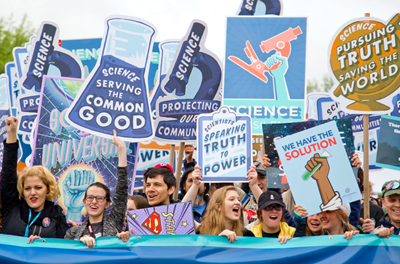
Science advocacy is the active support and promotion of science-informed policies, funding, education, and public understanding. It spans a wide range of activities - from writing op-eds and speaking at town halls to lobbying lawmakers, joining community initiatives, or even running for public office. It is not partisan or propagandistic when done properly; rather, it is a civic duty, rooted in the belief that scientific knowledge is a public good and that its responsible application is essential for the well-being of society and the planet.
The need for science advocacy is more urgent than ever. As misinformation spreads faster than peer-reviewed studies, and as trust in institutions erodes, scientists must not retreat into silence. Instead, they must learn to communicate more clearly, connect more humanely, and act more courageously. They must navigate the tension between objectivity and advocacy - not abandoning their role as neutral investigators, but fulfilling their role as ethical participants in democratic life.