Storage Systems for a Renewable Grid

Date: 2026-04-21
Category: Climate Change
All images are AI generated or shared
under Creative Commons licencing complying with rules for Attribution, Non-Commercial, No Derivatives, and Share Alike.
Image Link
Wikipedia Commons
Creative Commons Attribution-Share Alike 4.0
2021
Introduction
As renewable energy becomes the backbone of modern power systems, the challenge is no longer simply generating clean electricity - it's storing it at the right scale, duration, and cost. A new generation of energy-storage technologies is emerging to complement lithium-ion batteries, each tailored to different needs of a decarbonized grid. Together, sand batteries, pumped-storage hydropower, compressed-air energy storage, molten-salt systems, and green hydrogen illustrate how diverse physical principles can be harnessed to stabilize a renewable-heavy energy system.
"As renewable energy capacity grows, we must identify and expand better ways of storing this energy, to avoid waste."
Sand batteries represent one of the simplest and most elegant solutions: storing excess electricity as heat in large volumes of sand or crushed stone. These systems can reach temperatures of several hundred degrees Celsius and hold heat for weeks or even seasons. Their strengths - low cost, abundant materials, and long storage duration - make them ideal for district heating and industrial thermal demand, sectors that are difficult to electrify directly.
Pumped-storage hydropower (PSH) remains the world's largest and most mature form of grid-scale storage. By pumping water uphill when electricity is plentiful and releasing it through turbines when demand rises, PSH provides gigawatt-scale, multi-hour to multi-day storage with high efficiency and rapid response. New "closed-loop" designs reduce ecological impacts and expand siting possibilities, keeping PSH central to long-duration storage planning.
Compressed-air energy storage (CAES) uses surplus electricity to compress air into underground caverns or purpose-built tanks. When power is needed, the air is released, heated, and expanded through turbines to generate electricity. Advanced adiabatic CAES systems capture and reuse the heat generated during compression, improving efficiency and reducing reliance on fossil fuels. CAES offers large storage capacity and long discharge durations, making it suitable for balancing multi-day renewable variability.
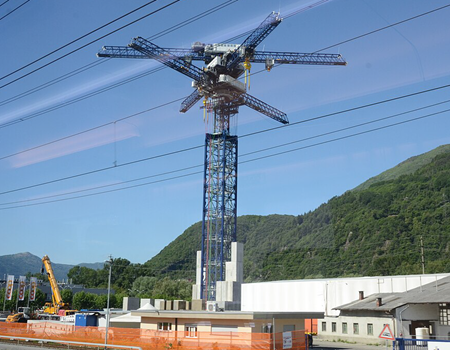
Molten-salt energy storage, widely used in concentrated solar power plants, stores heat in tanks of molten nitrate salts at temperatures often exceeding 500C. This thermal reservoir can drive steam turbines long after the sun sets, enabling solar plants to deliver firm, dispatchable power. As thermal storage costs fall, molten-salt systems are being explored for industrial heat and hybrid renewable-storage facilities.
Green hydrogen pushes storage into the seasonal scale. Using renewable electricity to split water into hydrogen and oxygen, it creates a fuel that can be stored for months and later used in turbines, fuel cells, industrial processes, or chemical production. While efficiency losses are significant, hydrogen's versatility and long-duration potential make it a cornerstone of deep decarbonization strategies, especially for heavy industry and long-distance transport.
Individually, these technologies solve different pieces of the storage puzzle - thermal, mechanical, chemical, short-term, long-term, and seasonal. Together, they form a diversified storage ecosystem capable of supporting a resilient, fully renewable energy system.