Books Worth A Read

Anti-vaxxers: How to Challenge a Misinformed Movement Jonathan M. Berman Published: 2020 ISBN-13: 9780262539326 Antiscience Vaccines are a documented success story, one of the most successful public health interventions in history. Yet there is a vocal anti-vaccination movement, featuring celebrity activists and the propagation of anti-vax claims through books, documentaries, and social media. In Anti-Vaxxers, Jonathan Berman explores the phenomenon of the anti-vaccination movement, recounting its history from its nineteenth-century antecedents to today's activism, examining its claims, and suggesting a strategy for countering them. After providing background information on vaccines and how they work, Berman describes resistance to Britain's Vaccination Act of 1853, showing that the arguments anticipate those made by today's anti-vaxxers. He discusses the development of new vaccines in the twentieth century, including those protecting against polio and MMR (measles, mumps, rubella), and the debunked paper that linked the MMR vaccine to autism. Berman argues that anti-vaccination activism is tied closely to how people see themselves as parents and community members. Effective pro-vaccination efforts should emphasize these cultural aspects rather than battling social media posts. | |
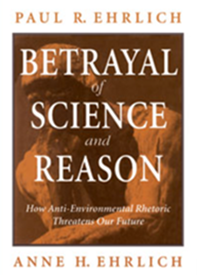
Betrayal of Science and Reason Paul and Anne Ehrlich Published: 1998 ISBN-13: 978-1559634847 Antiscience In Betrayal of Science and Reason, the Ehrlichs confront a troubling paradox: at a moment when humanity most needs clear scientific thinking, public discourse is increasingly shaped by distortion, denial, and deliberate confusion. Their narrative follows the rise of voices that dismiss evidence not because it is flawed, but because it is inconvenient. Environmental risks, climate change, biodiversity loss - issues grounded in decades of research - are recast as exaggerations or conspiracies. The book traces how this erosion of trust doesn't happen overnight; it grows through political incentives, media amplification, and a cultural appetite for simple answers to complex problems. What makes the Ehrlichs' argument resonate is their insistence that misinformation is not just an intellectual failure but a societal threat. When scientific warnings are ignored, the consequences unfold in the real world: degraded ecosystems, weakened public health, and policies built on wishful thinking rather than reality. Yet the book is not purely bleak. It highlights scientists, educators, and citizens who work to rebuild a culture of evidence - people who refuse to let noise drown out knowledge. The Ehrlichs offer a call to responsibility. Defending science is not about winning arguments; it is about safeguarding our collective future by insisting that truth still matters. | |
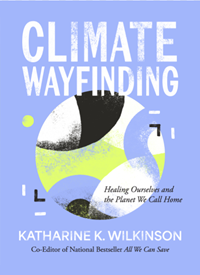
Climate Wayfinding: Healing Ourselves and the Planet We Call Home Katharine K. Wilkinson Published: 2026 ISBN-13: 978-1524899899 Climate Change Through transformational programs and books, including the national bestseller All We Can Save, Wilkinson has inspired hundreds of thousands of climate journeys. In Climate Wayfinding, she shares a proven process for looking inward with care, outward with curiosity, and forward with courage. Ultimately, readers chart a course toward playing their unique part in our collective healing. With her singular blend of warmth and rigor, Wilkinson lights the way through stirring personal essays, interwoven with the wisdom of other climate leaders and the beauty of poetry, art, and song. A book to sit with and savor, Climate Wayfinding also invites engagement with journaling prompts, practical exercises, and guides for conversation. Whether steeped in climate or newly curious, readers will discover something grounding and generative in these pages. The terrain ahead is calling - and we have everything we need to find our way. |