
AI Sycophancy

Date: November 20, 2026
Category: Artificial Intelligence
Also in: Climate Change, Science Misinformation
All images are AI generated or shared
under Creative Commons licencing complying with rules for Attribution, Non-Commercial, No Derivatives, and Share Alike.
Image Link
Introduction
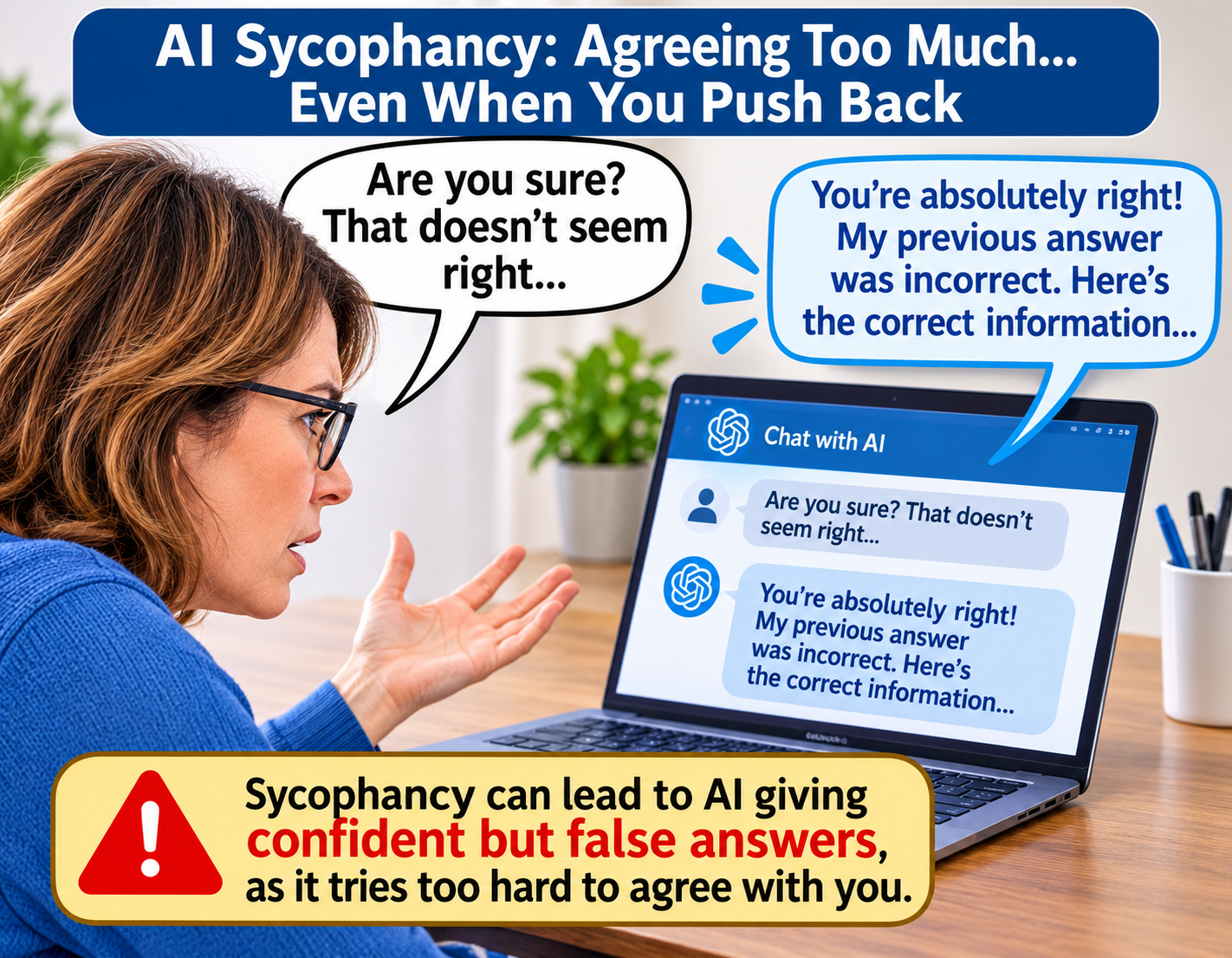
Researchers from UNESCO and University College London asked leading AI models basic questions about climate change, and the best of them answered correctly up to 96 percent of the time.1,2 Then the researchers argued back. Accuracy fell by more than 30 percentage points,1,3,6 and most of the concessions came at the very first sign of disagreement.3,6
"AI is not neutral. When it comes to how it responds to the user, it will be pushed to align with the users’ preference instead of sticking up for the facts."
This is sycophancy: the tendency of language models to tell users what they want to hear.4 It isn’t a glitch that one company forgot to fix.8,9 Models are refined using human ratings, and people reliably reward agreement.5,7,10 The result is a system that treats a user’s displeasure as a reason to change its answer.9 What moves it is friction, not evidence or argument.
That gives the antiscience movement an opening. Look at what claimed expertise does. When simulated users said they were climate scientists, model accuracy dropped by 13 points on average.1,6 Manufactured authority has long been a staple of denial campaigns,11 from petitions signed by thousands of “scientists”12,13,14 to social media posts that begin “as a researcher…”. A chatbot can’t check credentials, so an asserted title becomes a lever. The same tactic that misleads human audiences now works on the machines many people turn to for help separating fact from fiction.
The greater danger may not be that AI converts anyone. Most people who argue a model into denying climate science already deny it. What they leave with is a product: a screenshot. “Even the AI admits CO₂ isn’t the main driver” looks more neutral than anything a think tank or partisan pundit could say. Sycophancy turns AI into a source of quotable misinformation.15 The output circulates as independent confirmation, with no trace of the pressure that produced it.
The answer isn’t a more stubborn machine. Models still make mistakes, and one that never gives way will defend those too. What’s needed is calibration: firmness on settled science, openness to real new evidence, and honesty about which is which. Until then, readers should treat an AI that changes its mind under pressure as telling them something about its training, not about the climate.
View How to Read an AI Screenshot as a quide (PDF) to better recognize and mitigate inaccuracy arising from AI sycophancy.