Global Inequities and Climate Change

Date: 2026-05-08
Category: Global Inequities
Introduction
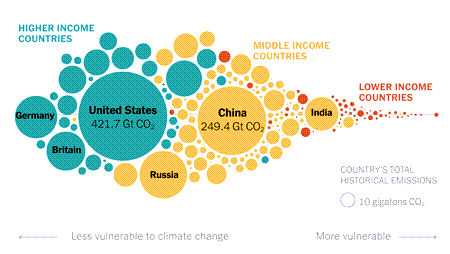
Climate change is frequently described as an existential threat to humanity. What that framing obscures is that it is not an equal threat. The countries least responsible for the carbon emissions driving global warming are, by a cruel geographic and economic logic, the most exposed to its consequences. This gap between who caused the crisis and who bears its costs is among the most profound moral challenges of the twenty-first century.
"Climate change and inequality are inextricably linked ... it’s time for powerful nations to pay their fair share."
The numbers are stark. The United States, European Union, and China account for the majority of cumulative historical emissions. Sub-Saharan Africa contributes less than 4% of global CO2 output. Yet it is the African continent - along with South Asia, small island nations, and low-lying coastal states - that faces the most severe disruptions: intensifying droughts, collapsing agricultural yields, rising seas swallowing inhabited land, and heat conditions that will render parts of the tropics physiologically uninhabitable during peak summer months. Bangladesh, responsible for a fraction of a percent of global emissions, faces the loss of roughly 17% of its land area to sea level rise by 2050. The Maldives, contributing almost nothing to the problem, is engineering the purchase of land in other countries against the day its islands disappear entirely.
The inequity compounds at every level. Wealthier nations can build seawalls, relocate populations, develop drought-resistant crops, and cool their cities with energy-intensive infrastructure. Poorer nations cannot. They face the same intensifying storms and the same failed harvests without the fiscal reserves, insurance markets, or institutional capacity to absorb repeated shocks. Each climate disaster - a cyclone in Mozambique, a flood in Pakistan, a drought in the Horn of Africa - drains resources that might otherwise fund schools, hospitals, or economic development, locking vulnerable nations into cycles of recovery they never fully complete.
Migration is becoming the arithmetic of survival. The World Bank estimates that over 200 million people could be internally displaced by climate impacts by 2050. When they cross international borders, they encounter political systems that have not begun to reckon with the legal and humanitarian frameworks required to recognize a climate refugee as distinct from an economic migrant.
The architecture of climate injustice is not accidental - it follows the existing architecture of global inequality. Addressing it will require not only emissions reductions but a serious reckoning with who owes what to whom, and why the world's poorest are paying the highest price for a problem they did almost nothing to create.