Anti-Science Bills in the USA

Date: 2026-04-27
Category: Political Interference
Introduction
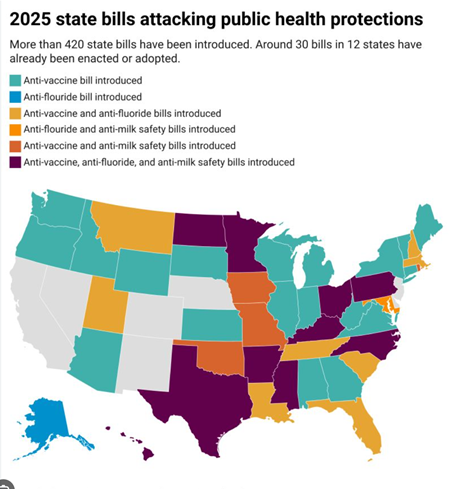
In the last two years, the United States has experienced an unprecedented surge in anti-vaccine legislation, part of a broader wave of anti-science bills reshaping long-standing public health protections. According to multiple Associated Press investigations, more than 420 bills targeting vaccines, fluoride, and even basic food safety regulations were introduced across most U.S. states in a single legislative cycle, with around 30 enacted or adopted in at least 12 states. Although these bills vary in scope, anti-vaccine provisions are the most common, reflecting a coordinated effort by advocacy networks that have gained political traction in recent years.
"Anti-science bills hit statehouses, stripping away public health protections built over a century"
These bills take many forms. Some seek to expand vaccine exemptions, making it easier for individuals to opt out of routine immunizations. Others aim to restrict vaccine mandates, increase liability for vaccine providers, or add regulatory hurdles that make it harder for public health agencies, schools, and healthcare systems to maintain high vaccination rates. A number of proposals go further, attempting to ban certain vaccines outright or grant special protections to unvaccinated individuals - effectively reframing public health safeguards as discrimination.
The risks created by this legislative trend are profound. Falling vaccination rates have already contributed to the resurgence of diseases such as measles and whooping cough, illnesses once kept at bay through decades of successful immunization programs. Public health experts warn that weakening vaccine infrastructure erodes herd immunity, leaving vulnerable individuals - such as infants, immunocompromised people, and those with chronic conditions - at heightened risk. The human cost is not hypothetical: families have already lost children to vaccine-preventable diseases in communities where immunization rates have slipped.
Beyond immediate health impacts, these bills normalize conspiracy-driven narratives, pushing fringe ideas into mainstream policy debates. Analysts note that this shift represents a broader cultural challenge: the migration of misinformation from the margins into statehouses, where it can reshape laws that have protected public health for more than a century. As these ideas gain legislative legitimacy, they undermine public trust in scientific institutions, weaken the authority of health agencies, and complicate emergency responses to future outbreaks.
In sum, the rapid growth of anti-vaccine legislation in the past two years reflects a politically organized movement with far-reaching consequences. By dismantling evidence-based protections and amplifying misinformation, these bills threaten not only individual health but the collective resilience of communities across the country.