
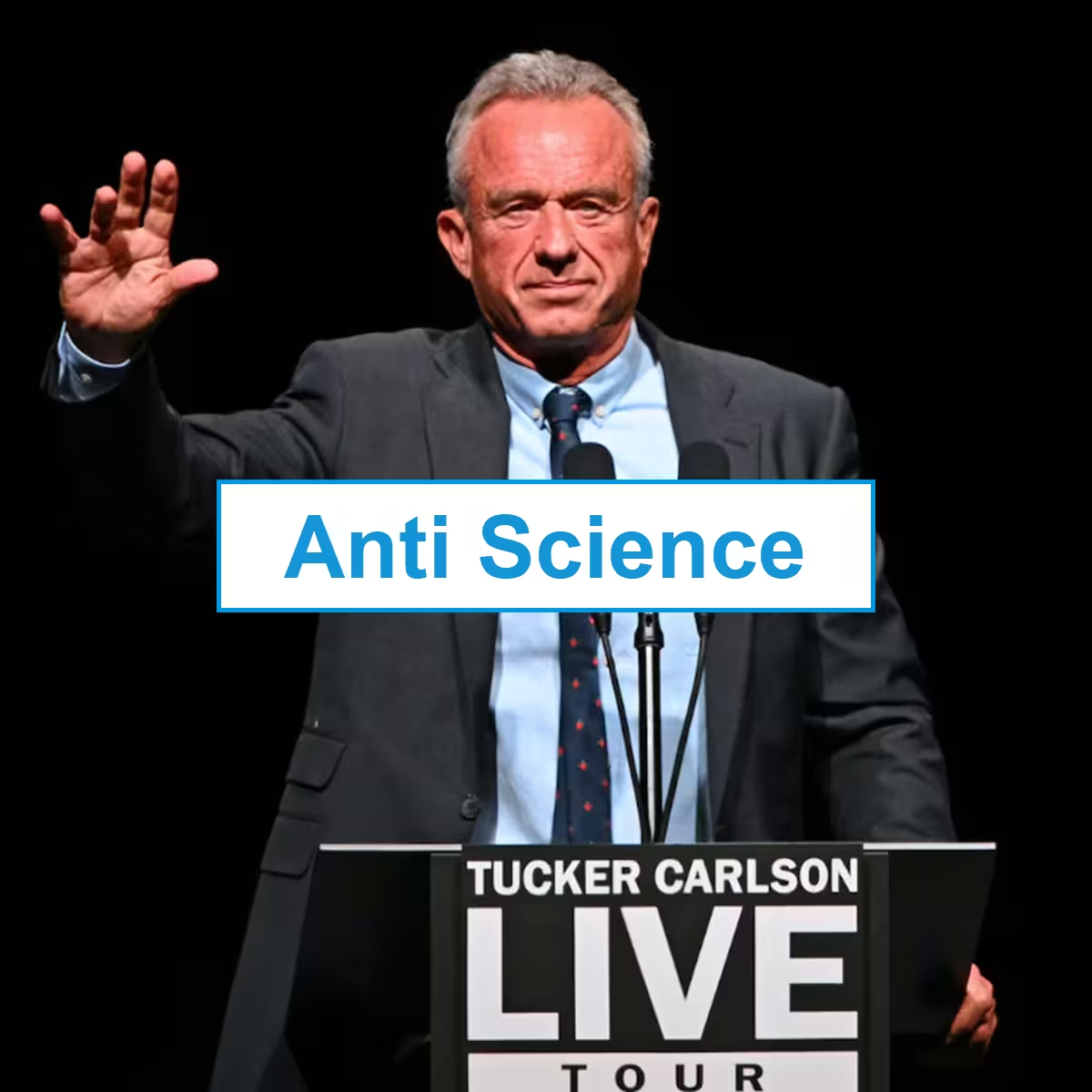



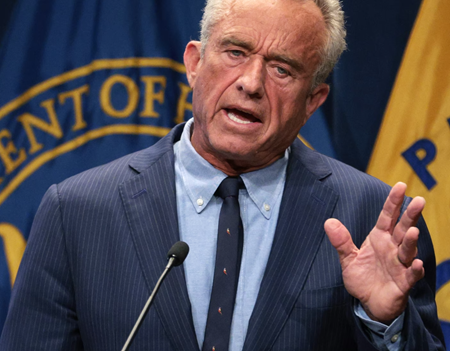
The past several years have seen growing concern among researchers, agency staff, and science-policy observers about the effects of political interference on the integrity of federal science. Reporting from multiple outlets describes how actions taken under Health and Human Services Secretary Robert F. Kennedy Jr. have reshaped scientific agencies in ways that many scientists say undermine independence, continuity, and public trust.
"You basically have the most prolific anti-vaccine advocate in the highest position of power in the federal government when it comes to health"
One of the most immediate impacts has been disruption of federally funded research. According to fact-checking and investigative reporting, thousands of grants across the National Institutes of Health were terminated or frozen, affecting clinical trials and basic research alike. One analysis found that roughly one in thirty clinical trials was halted, leaving more than 74,000 participants in limbo. Scientists told reporters that even when some grants were later reinstated, the interruptions caused lasting damage to research programs, patient recruitment, and long‑term data integrity.
Another major consequence has been loss of scientific talent. High-profile resignations at NIH have been attributed to what departing researchers described as censorship or pressure to align with political priorities. For example, a leading scientist studying ultra-processed foods publicly stated that he could no longer conduct unbiased research within the agency after being blocked from speaking with journalists about his findings. His departure was part of a broader pattern of oustings and early retirements that have thinned the ranks of senior federal scientists.
Political influence has also reached into regulatory decision‑making, particularly at the Food and Drug Administration. Reporting describes instances in which FDA leaders were asked to consider drug approvals or label changes based on limited evidence, in ways that staff viewed as unprecedented. In one case, officials were pressed to advance a generic drug as an autism treatment despite only small, preliminary studies - an effort that staff pushed back against but that ultimately resurfaced in public announcements. Career scientists told reporters that such episodes erode long-standing norms meant to keep regulatory science insulated from political agendas.
Taken together, these developments illustrate how political interference can ripple across the scientific ecosystem: halting research, driving away expertise, and pressuring regulatory processes. Analysts note that these impacts extend beyond any single administration or figure; they shape public confidence in scientific institutions and the government's ability to make evidence-based decisions. The narrative emerging from these reports is not about isolated disputes, but about the structural fragility of scientific integrity when political priorities override established norms of independence, transparency, and methodological rigor.
| • | RFK Jr. Is Systematically Undermining Vaccine Science and Endangering Health |
| • | "Politicized" Science and Attacks on Public Health |
| • | "This Is Not How We Do Science, Ever" |