
The Rewriting of U.S. Government Climate Science

Date: November 06, 2026
Category: Climate Change
All images are AI generated or shared
under Creative Commons licencing complying with rules for Attribution, Non-Commercial, No Derivatives, and Share Alike.
Image Link
Introduction
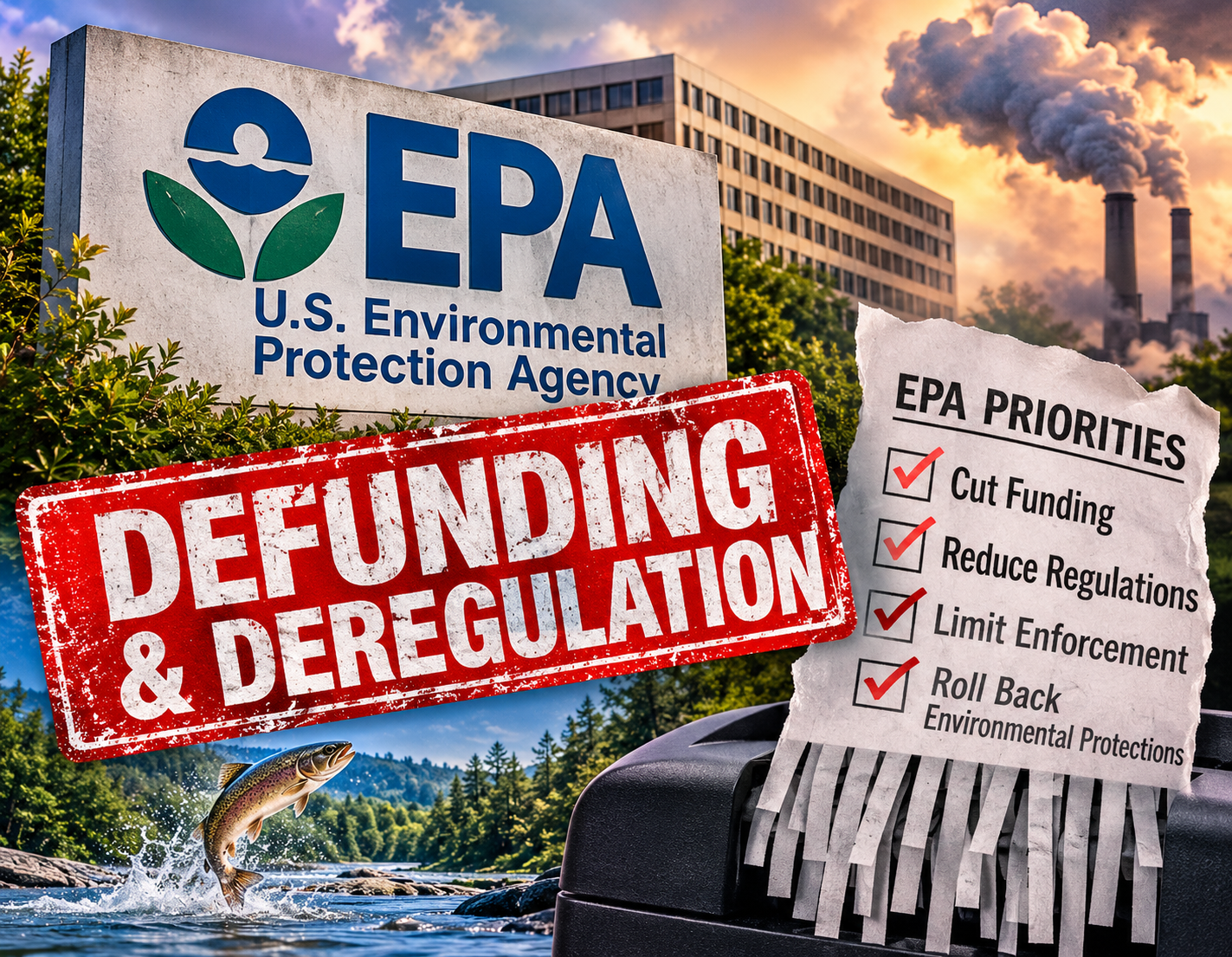
The period 2025 - 2026 has witnessed an extraordinary confrontation between scientific evidence and political ideology in the United States. Under the Trump administration, federal climate science has increasingly become the target of efforts to challenge, reinterpret, suppress, and selectively rewrite established scientific findings. Rather than allowing independent research and evidence to guide public policy, the administration has pursued changes that critics argue are designed to minimize the perceived dangers of climate change and weaken the scientific foundations of environmental protection.
"...will be the largest deregulatory action in the history of America."
One of the most significant developments occurred in July 2025, when the Department of Energy released A Critical Review of Impacts of Greenhouse Gas Emissions on the U.S. Climate. Produced by a five-member Climate Working Group selected by Energy Secretary Chris Wright, the report challenged conventional assessments of climate change, suggesting that its economic consequences were less severe than generally understood and that aggressive emissions reductions could be counterproductive. More than 85 climate scientists subsequently challenged the report, identifying methodological problems, selective use of research, and departures from accepted scientific assessment practices. The American Meteorological Society also identified fundamental shortcomings, including inadequate disciplinary representation and insufficient evaluation of the broader scientific literature.
Another major development was the removal of the National Climate Assessments from the government's Global Change Research Program website in July 2025. These congressionally mandated reports represent years of research involving hundreds of scientists and multiple federal agencies. The fifth assessment, published in 2023, documented the growing effects of climate change across American communities, agriculture, infrastructure, and ecosystems. The administration also dismissed hundreds of scientists involved in preparing future assessments. In December 2025, the EPA further altered its public communications, removing references to human-caused climate change and deleting information about climate indicators and health impacts.
These developments illustrate a particularly dangerous form of anti-science: politicizing the production and presentation of scientific knowledge itself. Scientific uncertainty, which is an essential part of legitimate research, is being emphasized selectively to suggest that established conclusions are unreliable. Meanwhile, evidence supporting those conclusions receives less attention. Rolling back scientific integrity protections at federal agencies further threatens the independence of government researchers.
The consequences extend well beyond scientific institutions. Climate assessments inform disaster preparedness, public health planning, infrastructure investment, and environmental regulation. Undermining their credibility risks leaving communities less prepared for extreme heat, flooding, drought, wildfires, and rising sea levels. The emergence of alternative government-sponsored interpretations also creates confusion about what constitutes reliable scientific evidence.
The central concern is not that climate science should be immune to criticism or revision. Scientific conclusions must always remain open to examination. Rather, the danger arises when political authorities selectively redefine the evidence to achieve predetermined ideological and economic objectives. The rewriting of American climate science represents a serious assault on scientific independence, public accountability, and evidence-based policymaking.
Updates
2026-11-06: The EPA’s February 2026 rescission of its landmark 2009 Greenhouse Gas Endangerment Finding has prompted multiple legal challenges from environmental groups, public-health organizations, Indigenous communities, and state governments. A coalition of 23 states argues that the EPA has disregarded established scientific evidence linking greenhouse gas emissions to threats to public health and welfare. Environmental and youth organizations have also challenged the decision, questioning its legal justification and departure from decades of climate research. At the heart of these lawsuits is whether the EPA can overturn an established scientific determination by reinterpreting its regulatory authority. The courts have consequently become a critical battleground over the future of federal climate protections.
2026-11-07: The Bipartisan American Affordability and Jobs Act (BAAJA) of 2026, introduced in September as S. 5653, proposes sweeping reforms to federal environmental permitting. Although promoted as a way to lower energy costs and accelerate infrastructure development, it raises significant environmental concerns. By narrowing environmental reviews, restricting legal challenges, and making existing permits harder to revoke, the legislation could weaken important safeguards protecting ecosystems, wildlife, and communities. Its provisions could also accelerate fossil-fuel infrastructure development.