Antiscience Lobbyists

Date: 2026-04-28
Category: Science Policy

All images are AI generated or shared
under Creative Commons licencing complying with rules for Attribution, Non-Commercial, No Derivatives, and Share Alike.
Image Link
AI Generated
2026
Introduction
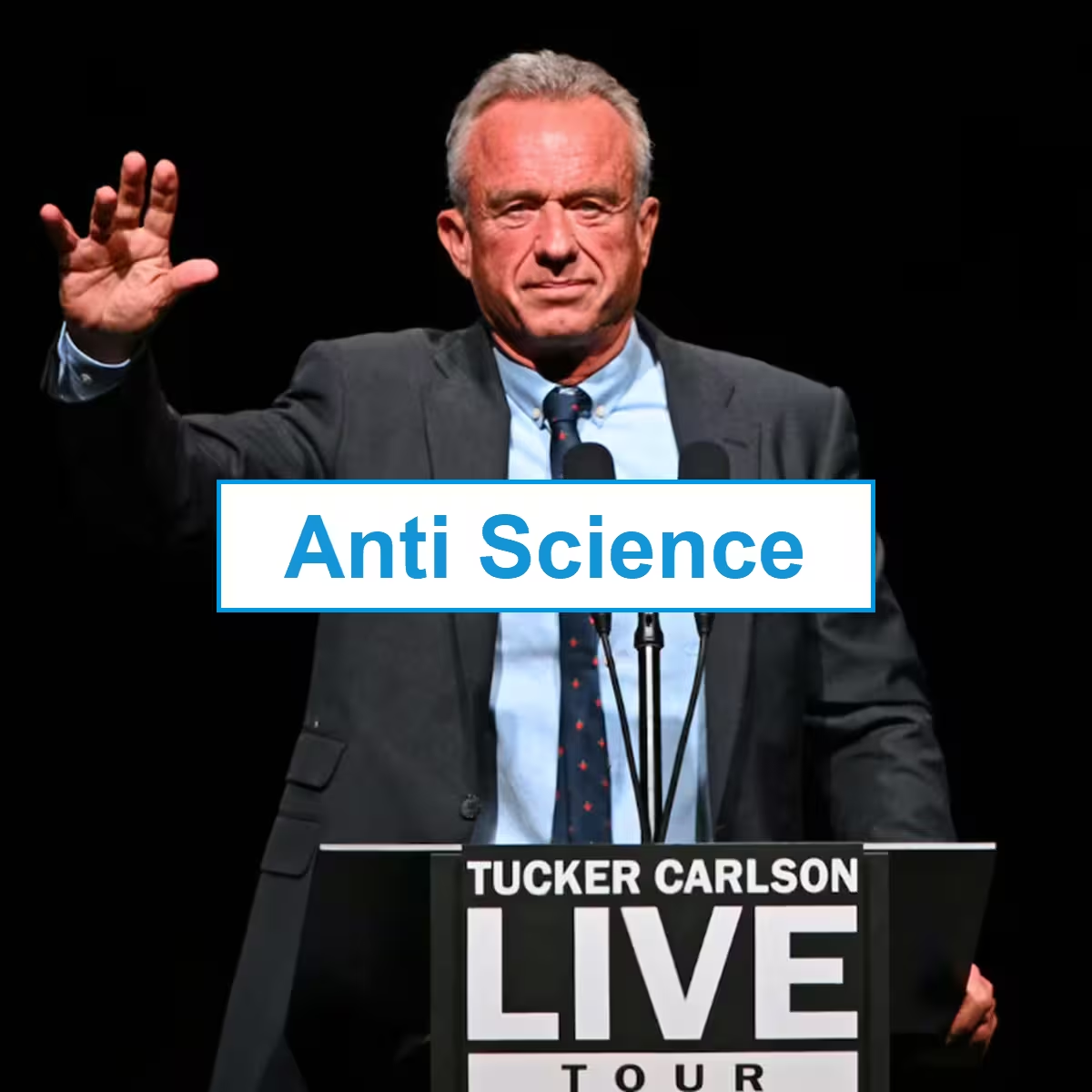
Antiscience lobbyists have become a significant force in shaping science policy, often steering it away from evidence-based decision-making and toward outcomes that serve political or economic interests. Their influence rarely comes from engaging with scientific research; instead, it grows through targeted misinformation campaigns, strategic alliances, and efforts to undermine public trust in scientific institutions.
"Who told you the earth was warming … Chicken Little?"
Analysts who study these trends describe how lobbyists work to reframe scientific consensus as "uncertain", "controversial", "ideologically biased", even when the underlying evidence is robust. Once doubt is seeded, it becomes easier to weaken regulations, restrict scientific agencies, or block policies that rely on established research.
The consequences can be seen in concrete examples. In several regions, lobbying efforts contributed to laws limiting public-health agencies - authority to respond to emergencies - measures that researchers and medical associations warned could slow responses to future outbreaks. Environmental policy offers another example: reports have documented how lobbying campaigns helped delay or dilute regulations on pollutants despite strong scientific evidence linking them to health risks. In education, some states have passed laws that restrict or complicate the teaching of established scientific topics, such as climate science, by framing them as politically contentious rather than empirically grounded. These policies do not emerge from new scientific findings; they emerge from pressure campaigns designed to reshape public perception of science itself.
The broader impact is a policy environment where evidence competes with ideology on unequal terms. When antiscience lobbying succeeds, the result is weakened environmental protections, reduced public-health capacity, and a population less equipped to navigate complex scientific issues. The long-term cost is not only regulatory - it is cultural. As trust in scientific expertise erodes, it becomes harder for society to respond collectively to challenges that require shared understanding, from pandemics to climate change.
Ultimately, the rise of antiscience lobbying reflects a struggle over who gets to define reality in public life. Science, with its slow, methodical, evidence-driven process, can be inconvenient for groups seeking rapid political wins or deregulation. Lobbyists exploit that tension by amplifying doubt and reframing scientific questions as matters of belief. The result is a form of negative science policy that prioritizes short-term interests over long-term public good, leaving society less prepared for the challenges ahead.