
Climate Change Myths: Separating Fact from Fiction

Date: November 07, 2026
Category: Climate Change
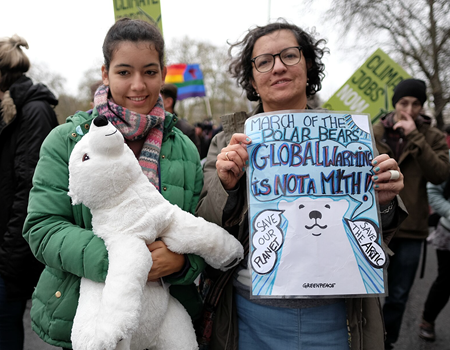
All images are AI generated or shared
under Creative Commons licencing complying with rules for Attribution, Non-Commercial, No Derivatives, and Share Alike.
Image Link
Wikipedia Commons - Creative Commons Attribution-Share Alike 2.0 Generic license.
2015
Introduction
Climate change denial frequently relies on familiar myths that appear scientifically plausible but misrepresent or selectively interpret climate evidence. These arguments are repeatedly used to create doubt about the scientific consensus and undermine public confidence in climate research. Examining the evidence behind these claims helps distinguish legitimate scientific questions from misinformation.
"We are more sure that greenhouse gasses are causing climate change than we are that smoking causes cancer."
Myth 1 - It's the Sun: The Sun influences Earth's climate, but measurements show that solar output has not increased sufficiently to explain the warming observed over recent decades. Scientists have identified a clear greenhouse-gas fingerprint: the lower atmosphere is warming while the upper atmosphere is cooling. This pattern is consistent with increasing greenhouse gas concentrations, not increased solar activity.
Myth 2 - The Climate Has Always Changed: Earth's climate has naturally changed throughout its history through ice ages, volcanic activity and variations in Earth's orbit. However, this does not explain today's unusually rapid warming. Scientific evidence demonstrates that the current warming trend is primarily driven by human activities, particularly the burning of fossil fuels. Natural climate change in the past does not invalidate human-caused climate change today.
Myth 3 - CO₂ Is Plant Food: Carbon dioxide is essential for photosynthesis, and increased concentrations can benefit some plants under certain conditions. However, this argument ignores the consequences of excessive heat, drought, changing rainfall patterns and nutrient limitations. These factors can offset or overwhelm any benefits of additional CO₂. More carbon dioxide does not automatically produce healthier ecosystems or greater agricultural productivity.
Myth 4 - Global Warming Paused: Climate sceptics frequently point to the early 2000s as evidence that global warming temporarily stopped. This argument selectively examines a relatively short period when surface temperatures increased more slowly. It overlooks natural variability, particularly changes in ocean heat absorption. The underlying warming trend continued, and the oceans continued accumulating heat.
Myth 5 - Climate Models Are Unreliable: Climate models are not perfect, but their long-term projections have demonstrated considerable accuracy. They successfully anticipated many of the warming patterns subsequently observed. Uncertainties remain, particularly regarding regional impacts and future emissions, but uncertainty does not mean scientific predictions are unreliable.
Myth 6 - It Was Cold This Winter: This argument confuses weather with climate. Weather describes short-term atmospheric conditions, whereas climate represents long-term patterns measured over decades. A cold winter, severe snowstorm or unusually cool summer in one location does not contradict a warming global climate.
These myths persist because they exploit misunderstandings, selective evidence and misleading comparisons. Recognizing them requires scientific literacy and critical thinking. The central question is not whether Earth's climate has changed naturally throughout history, but whether human activity is now driving an unusually rapid and potentially dangerous rate of change. The scientific evidence overwhelmingly confirms that it is.