History of Antiscience

Date: 2026-01-23
Category: Antiscience

Introduction
Antiscience has never been a single movement so much as a recurring pattern in human history - a pushback against the authority, methods, or cultural influence of science. Its roots stretch back to the Scientific Revolution, when early experimentalists like Robert Boyle found themselves challenged by thinkers such as Thomas Hobbes who doubted that empirical investigation could reveal true knowledge about the natural world.
"Ideas are more powerful than guns. We would not let our enemies have guns, why should we let them have ideas."
By the 18th century, critiques of science took on a moral dimension. Jean-Jacques Rousseau, in his Discourse on the Arts and Sciences, warned that scientific progress could corrupt virtue and erode moral character. Although he admired figures like Descartes and Newton, Rousseau's writing helped establish a long-lasting cultural tension: the fear that science, for all its explanatory power, might distance humanity from its ethical foundations.
The 19th and early 20th centuries saw antiscience emerge in new forms, often intertwined with political ideology. Some critics rejected scientific reductionism, arguing that human behavior and society could not be understood through empirical methods alone. Others resisted the growing influence of scientific institutions, perceiving them as threats to traditional authority or spiritual worldviews. These strands were diverse - ranging from philosophical antireductionism to outright hostility toward scientific epistemology - but they shared a common skepticism about science's claim to describe reality objectively.
The most catastrophic example of antiscience in power came under Joseph Stalin, who embraced the pseudoscientific agricultural theories of Trofim Lysenko. Lysenko rejected genetics in favor of unproven ideas about plant heredity, and his influence led to the suppression, imprisonment, and death of legitimate scientists such as Nikolai Vavilov. The result was agricultural collapse and widespread famine - an enduring reminder that antiscience, when fused with authoritarianism, can be deadly.
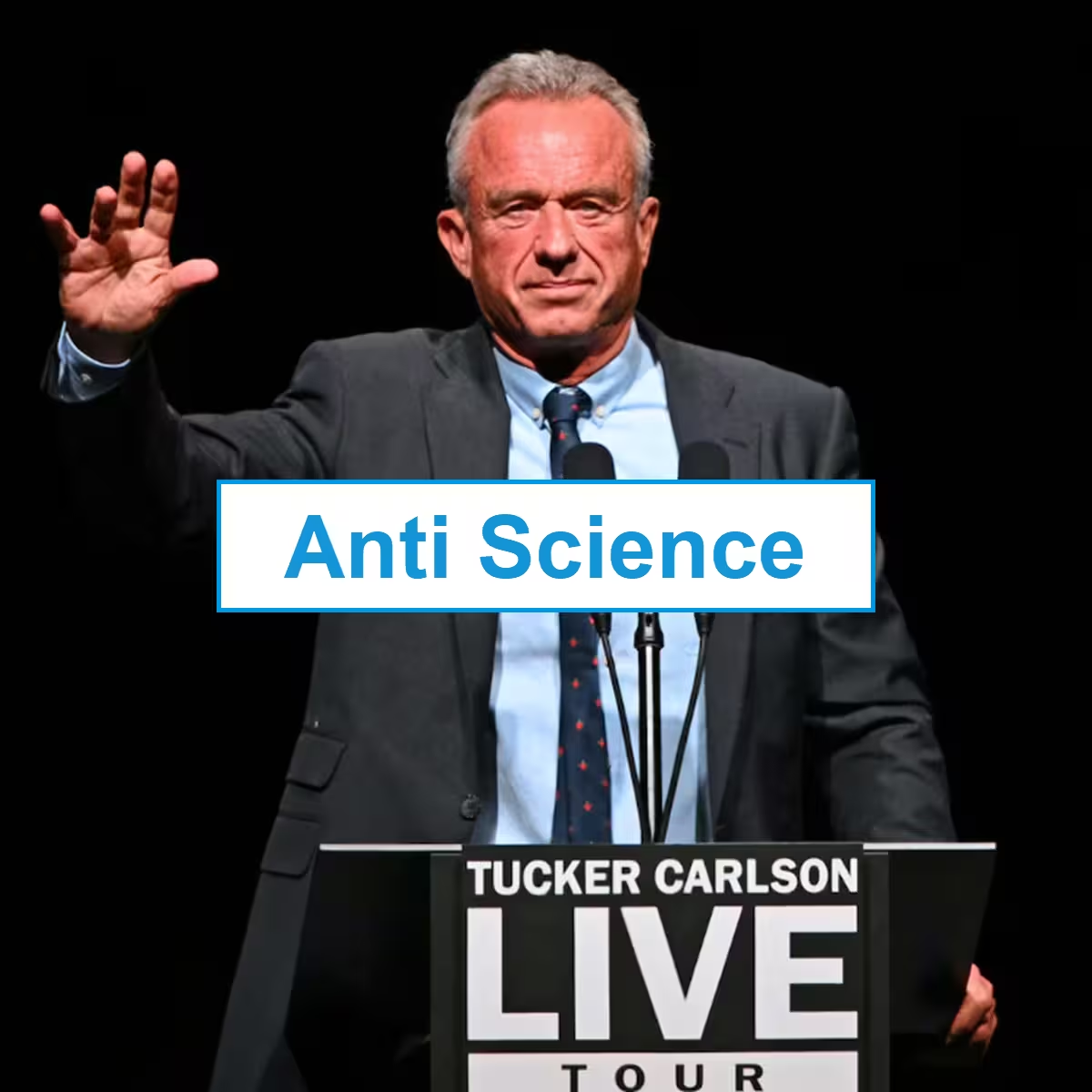
In the 21st century, antiscience has re-emerged with new speed and reach. Digital platforms (social media) have amplified misinformation, allowing pseudoscience, conspiracy theories, and ideological attacks on scientific institutions to spread globally. Scholars describe this modern wave as a coordinated attempt to undermine the legitimacy of science itself, fueled by political polarization and distrust in expertise. Its consequences have been profound: from vaccine refusal to climate denial, antiscience has contributed to preventable deaths and hindered responses to global crises.
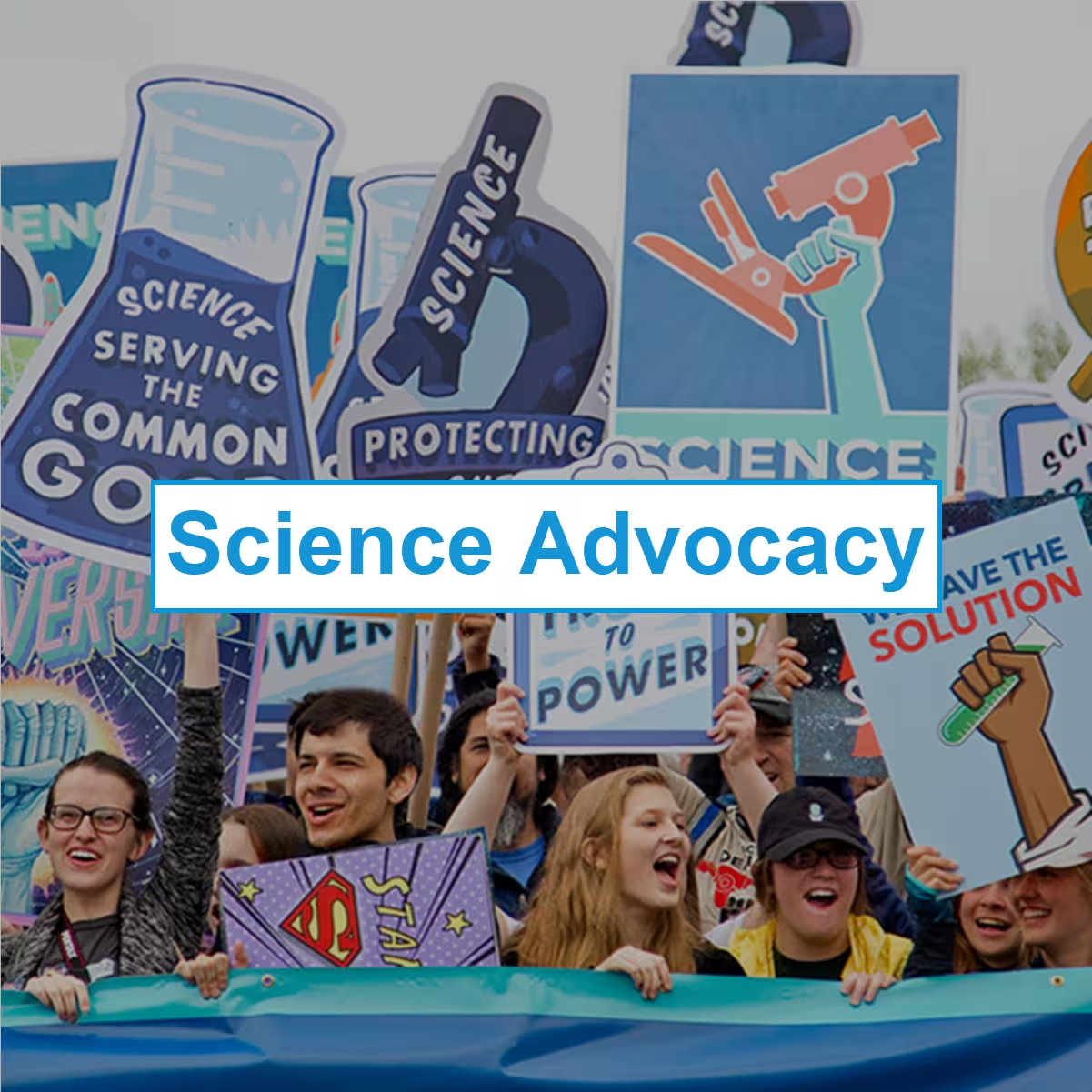
Across centuries, the history of antiscience reveals a persistent struggle over how societies understand truth, authority, and progress. Science has repeatedly expanded human knowledge, but each expansion has met resistance - from philosophical skepticism to political manipulation. Understanding this history is essential today, not to dismiss dissent, but to recognize how fragile public trust in science can be - and how vital it is to defend evidence-based reasoning in an era where misinformation spreads faster than ever.