
Medical Misinformation

Date: November 11, 2026
Category: Public Health
All images are AI generated or shared
under Creative Commons licencing complying with rules for Attribution, Non-Commercial, No Derivatives, and Share Alike.
Image Link
Introduction
Medical misinformation is the spread of false, misleading, or scientifically unsupported claims about diseases, treatments, medications, vaccines, and other aspects of healthcare. It represents a growing public health challenge, undermining evidence-based medicine and weakening public confidence in healthcare institutions. Unlike legitimate scientific debate, medical misinformation frequently presents unsubstantiated claims as established facts, often exploiting fear, uncertainty, and distrust. From an anti-science perspective, it is particularly dangerous because it replaces scientific evidence and clinical expertise with ideology, speculation, and personal belief.
"Many Americans die or experience serious illness every year due to bad choices driven by false or misleading information."
Social Media and Digital Platforms: Social media is one of the most significant drivers of medical misinformation. Platforms such as Facebook, YouTube, TikTok, and X allow misleading health claims to reach millions of people rapidly, often without meaningful scientific verification. Algorithms that prioritize engagement, controversy, and emotional reactions can amplify sensational claims over accurate medical information. Influencers and individuals without medical qualifications may acquire substantial followings by promoting unproven treatments, questioning established medical practices, or presenting personal anecdotes as scientific evidence.
Distrust, Commercial Interests, and Ideology: Other drivers include declining trust in government health agencies, pharmaceutical companies, universities, and medical professionals. Historical medical failures and legitimate concerns about healthcare costs can provide fertile ground for conspiracy theories and unsupported claims. Commercial interests also contribute, with some individuals and organizations profiting from selling unproven supplements, alternative treatments, and questionable health products. Political and ideological movements can further reinforce misinformation by portraying established medical science as a threat to personal freedom or individual beliefs.
Public Health and Individual Risks: The consequences can be severe. Patients may delay seeking medical attention, reject effective treatments, discontinue prescribed medications, or substitute unproven remedies and pseudoscience for established therapies. Vaccine misinformation can reduce immunization rates, increasing the risk of preventable outbreaks. False claims about cancer treatments, infectious diseases, and chronic illnesses can lead to avoidable suffering and deaths. Medical misinformation also places additional pressure on healthcare systems, increases public confusion, and makes effective health communication more difficult.
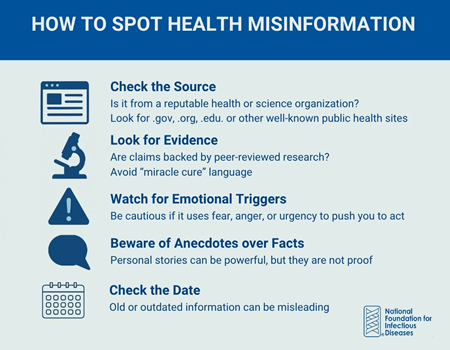
The Importance of Scientific Literacy: Combating medical misinformation requires accessible science education, transparent communication from healthcare authorities, responsible social media practices, and stronger accountability for those deliberately spreading false claims. Individuals must learn to evaluate sources, distinguish scientific consensus from unsupported opinion, and consult qualified healthcare professionals. Ultimately, medical decisions should be guided by reproducible evidence, rigorous clinical research, and established medical expertise—not viral posts, conspiracy theories, or commercial promotion.