The Benefits of Fluoride in Drinking Water

Date: 2026-02-21
Category: Public Health
Introduction
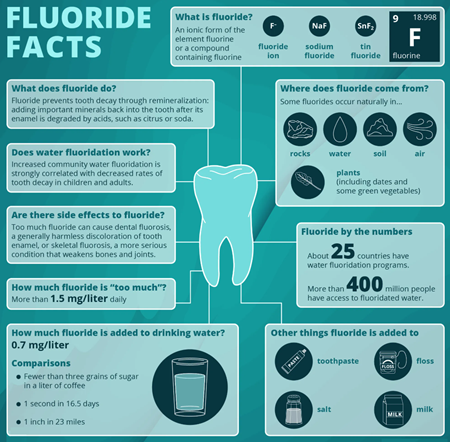
For nearly a century, adding fluoride to community drinking water has been one of the quiet success stories of public health. It's a simple idea with an outsized impact: by maintaining a small, stable level of fluoride in the water supply, communities dramatically reduce tooth decay across all ages and income levels.
"For more than 75 years, the best scientific evidence has consistently shown that fluoridation is safe and effective."
The mechanism is straightforward. Fluoride strengthens tooth enamel, making it more resistant to the acids that cause cavities. It also helps repair early stages of decay before they become serious problems. Because everyone drinks water, the benefits reach people who might otherwise struggle to access regular dental care - children, seniors, and low-income families in particular.
The results have been consistently documented. Decades of research from dental associations, public-health agencies, and independent scientists show that communities with fluoridated water experience significantly lower rates of cavities. This translates into fewer missed school days, lower healthcare costs, and better long-term oral health. It's one of those rare interventions that is inexpensive, equitable, and effective.
Yet despite this strong evidence, water fluoridation has become a target for antiscience narratives. These arguments often follow familiar patterns: they rely on misunderstandings of basic chemistry, misinterpretations of scientific studies, or the assumption that any government-run health measure must be suspect. One common claim is that fluoride is "toxic", usually based on the fact that high concentrations of many substances - including vitamins, minerals, and even water itself - can be harmful. But the fluoride levels used in public water systems are carefully regulated and far below thresholds associated with adverse effects. The Guidelines for Canadian Drinking Water Quality maximum recommended level for fluoride is 1.5 mg/L. The dose makes the difference, and in this case the dose is both safe and beneficial.
Another recurring argument suggests that fluoridation is a form of mass medication without consent. This framing ignores the fact that fluoride is a mineral that naturally occurs in many water sources; fluoridation simply adjusts the level to the optimal range for dental health. It also overlooks the broader principle that public utilities routinely manage water composition - removing contaminants, balancing pH, and adding disinfectants - to protect community health. Fluoride is part of that same continuum of evidence-based water treatment.
Antiscience narratives often thrive on distrust, especially when scientific expertise is portrayed as elitist or opaque. But the story of water fluoridation is the opposite: it's a public-health measure grounded in decades of transparent research, continuously monitored, and supported by dental and medical professionals around the world. It's not a mystery, nor a conspiracy - just a well-studied tool that helps people keep their teeth healthy.
In a time when misinformation spreads quickly, it's worth remembering that some of the most effective health interventions are also the simplest. Fluoridated water is one of them. It's a small addition to our taps that delivers a large benefit to our communities, quietly and reliably, every single day.