Pseudoscience

Date: 2026-02-01
Category: Antiscience
All images are AI generated or shared
under Creative Commons licencing complying with rules for Attribution, Non-Commercial, No Derivatives, and Share Alike.
Image Link
Wikipedia Commons
Creative Commons Attribution-Share Alike 3.0 Unported license
2009
Introduction
Pseudoscience often arrives wearing the costume of credibility. It borrows the language of research, the confidence of expertise, and the allure of simple answers. It spreads through headlines, social media feeds, and conversations among friends, offering explanations that feel intuitive and comforting. In a world full of uncertainty, pseudoscience promises clarity without complexity. That promise is exactly what makes it so dangerous.
"Science is like an inoculation against charlatans who would have you believe whatever it is they tell you."
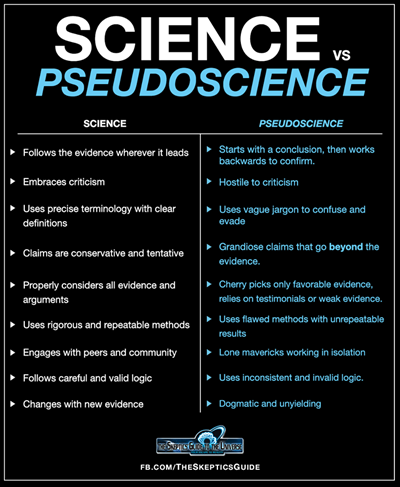
The heart of pseudoscience is not just that it is wrong - it is that it pretends to be right. It mimics the surface features of science while rejecting the discipline that makes science trustworthy: evidence, transparency, peer review, and the willingness to revise conclusions when new data emerges. Instead, pseudoscience clings to fixed beliefs, cherry-picks anecdotes, and often elevates charismatic personalities over rigorous methods. It thrives in the gaps between what people wish were true and what the evidence actually supports.
The risks extend far beyond intellectual confusion. When pseudoscience influences public decisions, the consequences become painfully real. Health misinformation can lead people to abandon effective treatments or embrace harmful ones. Climate denial delays action on a warming planet. Conspiracy theories erode trust in institutions, making it harder for societies to respond to crises with unity and clarity. Even seemingly harmless pseudoscientific ideas can open the door to more dangerous beliefs, creating a slippery path from curiosity to manipulation.
What makes pseudoscience especially potent today is the speed at which it spreads. Digital platforms reward emotional content over accurate content, and pseudoscience is engineered to provoke emotion - fear, hope, outrage, certainty. Once embedded in a community, it becomes self-reinforcing, insulated from correction by social identity and distrust of experts. The more it circulates, the harder it becomes for evidence-based voices to break through.
Yet the story is not purely bleak. The rise of pseudoscience has also sparked a renewed appreciation for scientific literacy, critical thinking, and transparent communication. It reminds us that science is not just a body of knowledge but a public good - one that requires stewardship, dialogue, and trust. Combating pseudoscience is not about shaming people for believing the wrong things; it is about creating environments where the right information is accessible, understandable, and compelling.
In the end, the struggle against pseudoscience is a struggle for agency. It is about ensuring that individuals and societies make decisions grounded in reality rather than illusion. And it is about recognizing that the pursuit of truth, however complex, is far more empowering than the comfort of easy answers.