Bad Research Design and Methods

Date: 2026-05-02
Category: Science Misinformation

All images are AI generated or shared
under Creative Commons licencing complying with rules for Attribution, Non-Commercial, No Derivatives, and Share Alike.
Image Link
Introduction
Real-World Clinical Outcomes of Ivermectin and Mebendazole in Cancer Patients is a research study that recently reported cancer-treatment benefits of ivermectinIvermectin is an anthelmintic. It works by interfering with the nerve and muscle functions of worms, by paralyzing and killing them. It is used to treat river blindness, intestinal infection from threadworms, and other kinds of worm infections. and mebendazoleMebendazole is a highly effective, broad-spectrum antihelmintic indicated for the treatment of nematode infestations, including roundworm, hookworm, whipworm, and threadworm.. It has faced significant criticism from the medical and oncology communities, and warrants closer examination as it serves to illustrate several study design and methodology flaws that effectively nullify or limit the study conclusions.
"There seems to be no study too fragmented... no design too warped, no methodology too bungled... for a paper to end up in print."
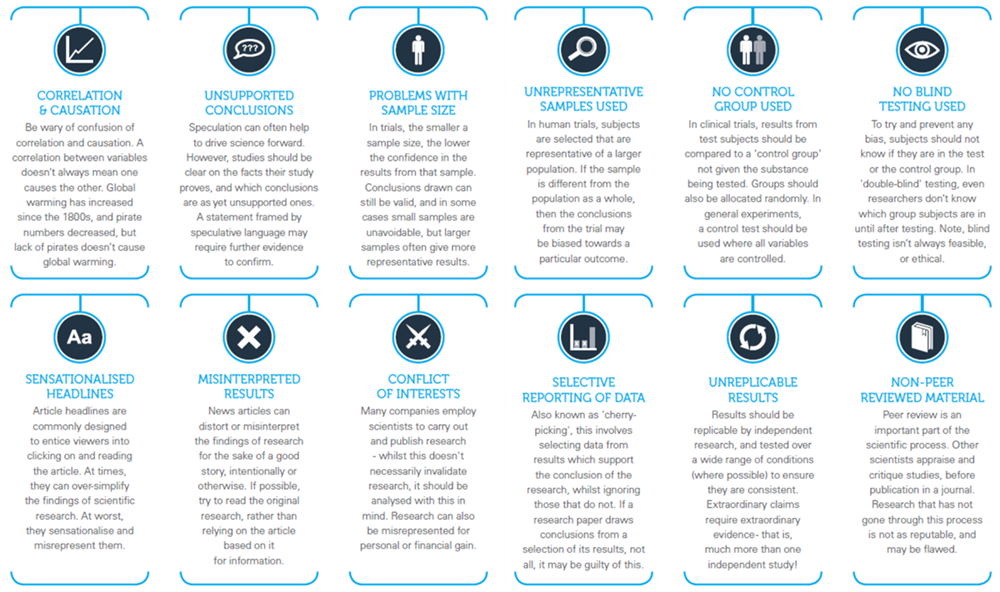
Learning the ways in which science information can be undermined or falsified helps us to recognise and counter false information. Sometimes science research can be misinterpreted by the media and on social media because of a lack of understanding about how science works. This is usually referred to as bad science and it results in misinformation. More intentional science disinformation can use faulty reasoning and pseudoscience to undermine facts.
Core criticisms of this study include:
- Observational and Non-Randomized Design: The study is an observational cohort, not a randomized controlled trial (RCT). Such studies cannot definitively prove that the ivermectin-mebendazole combination caused the improved outcomes, as they cannot control for confounding factors.
- Reliance on Self-Reported Data: Outcomes were based on surveys completed by patients, not independent clinical verification (e.g., blinded imaging analysis). This creates a high risk of recall and reporting bias.
- High Attrition Rate: Of the 197 initial participants, only 122 (61.9%) completed the follow-up survey. The outcomes of the remaining 38% are unknown, which may cause a "survivor bias" - where only those who felt better replied.
- Confounding Factors (Concurrent Therapies): A significant portion of the participants were receiving conventional treatments, including chemotherapy (27.9%), radiation therapy (21.3%), and surgery (19.7%). The study cannot distinguish whether improvements were due to the repurposed drugs, traditional treatment, or both.
- Selection Bias: The cohort was not randomized and likely included motivated patients seeking alternative therapies, which can lead to overreporting of benefits.
- Heterogeneous Population: The study included many different types of cancer (prostate, breast, lung, etc.) and different disease stages (active progression vs. stable), making it difficult to draw conclusions about the drug's effectiveness for any specific cancer type.
The study also lacked any peer review and cannot reference any other large-scale studies supporting its conclusions. The study raises several ethical concerns including dosing discrepancies, toxicity risks, and the forgo or delay of proven conventional treatments.