Religion's Role in Antiscience

Date: 2026-04-29
Category: Science Education
Introduction
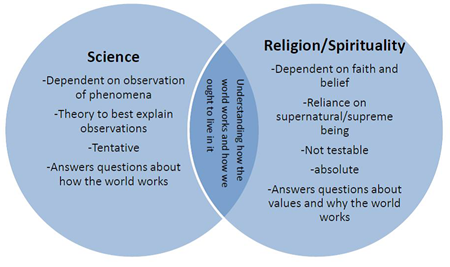
Religion's role in antiscience is complex - rooted not in faith itself, but in how certain religious institutions or movements have historically positioned belief against empirical inquiry. At its core, religion seeks meaning, moral order, and transcendence; science seeks explanation, evidence, and predictive power. When these aims are treated as mutually exclusive rather than complementary, conflict arises.
"The enemy of science is not religion... The true enemy is the substitution of thought, reflection, and curiosity with dogma."
Throughout history, religious authority has sometimes resisted scientific discoveries that threatened established cosmologies or scriptural interpretations. The trial of Galileo in the 17th century remains emblematic: heliocentrism challenged theological readings of the universe's structure, and the Church responded by defending its doctrinal worldview. Similar tensions reemerged in the 19th century with Darwin's On the Origin of Species, which undermined literalist creation narratives and provoked enduring cultural battles over evolution. In modern times, these disputes have evolved into political movements - creationism and intelligent design - framing scientific consensus as ideological rather than evidentiary.
Yet religion's antiscientific influence extends beyond doctrinal defense. It often manifests through epistemic authority: the claim that revelation or tradition supersedes observation. This can foster distrust of scientific institutions, particularly when science challenges moral or existential comfort zones - climate change, reproductive health, or genetic research. In such cases, religious rhetoric may recast scientific uncertainty as moral corruption or secular arrogance, transforming empirical debate into cultural identity struggle.
Importantly, not all religion is antiscientific. Many theologians and faith communities embrace science as a means of understanding creation, seeing no contradiction between empirical truth and spiritual meaning. The antiscience dynamic arises when belief systems become politicized - when faith becomes a tool for resisting social change or preserving hierarchical authority. In that sense, religion's antiscience role is less about theology than about power: the defense of certainty against the unsettling openness that science demands.