Assessing Science Research and Methods

Date: 2026-04-29
Category: Science General
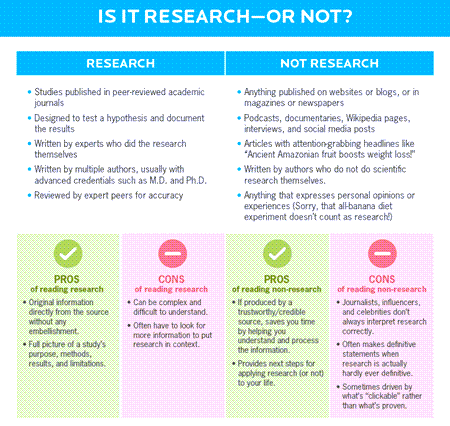
Introduction
Understanding and interpreting scientific articles is not easy. Research assessment plays a crucial role in evaluating the quality and impact of scientific research. It aids in decision-making processes related to funding, promotions, and collaborations. However, with the rapid growth of research output across various disciplines, it becomes increasingly important to have robust and reliable assessment criteria.
"The first principle is that you must not fool yourself – and you are the easiest person to fool."
A sound and reliable scientific study is built on a foundation of clarity, rigor, and transparency. At its core, science aims to describe, explain, predict, and sometimes intervene in the natural or social world through systematic observation, measurement, and reasoning. A well-constructed study begins with a clearly defined and testable hypothesis - one that arises from logical theory and existing knowledge.
The research question should be both specific and measurable; vague goals lead to ambiguous results. As recommended by the National Academies, reliable science operates under the assumption that nature is consistent, that knowledge grows through evidence, and that scientific inquiry is a communal process where findings are subject to scrutiny and replication.
Methodology is the backbone of reliability. An experiment or study must be designed in a way that minimizes bias and confounding variables while maximizing precision and validity. This means using randomization to ensure representativeness, control groups to provide comparison, and appropriate blinding to prevent expectancy effects. Instruments and measurement tools should be properly calibrated, with accuracy and precision verified through established standards. Data collection methods must be consistent, and researchers must be transparent about all procedures, from experimental setup to statistical analysis. A study that cannot be replicated or whose results cannot be reproduced with the same data and methods lacks scientific credibility.
Equally important is the emphasis on internal and external validity. Internal validity ensures that the conclusions drawn - particularly cause-and-effect relationships - are genuine and not distorted by extraneous factors. External validity assesses whether the results can be generalized beyond the study's sample or setting. Both hinge on rigorous design and thoughtful execution. Reporting practices matter too: the methods section should contain enough detail for another researcher to replicate the study exactly, including descriptions of variables, controls, calculations, and statistical tests used.
Finally, a sound scientific study embraces transparency and openness. Publishing complete data, sharing code, pre-registering hypotheses, and encouraging replication reinforce the communal nature of science and guard against manipulation or over-interpretation. Reliable science, then, is not merely the product of careful design and sound statistics - it is an ethical, transparent, and self-correcting process that advances knowledge by allowing others to question, test, and build upon it.
The article How To Read and Evaluate A Scientific Paper: A Guide for Non-Scientist outlines some simple steps on reading and assessing a science study effectively.