The Vaccine Adverse Event Reporting System (VAERS)

Date: 2026-04-25
Category: Vaccines

Introduction
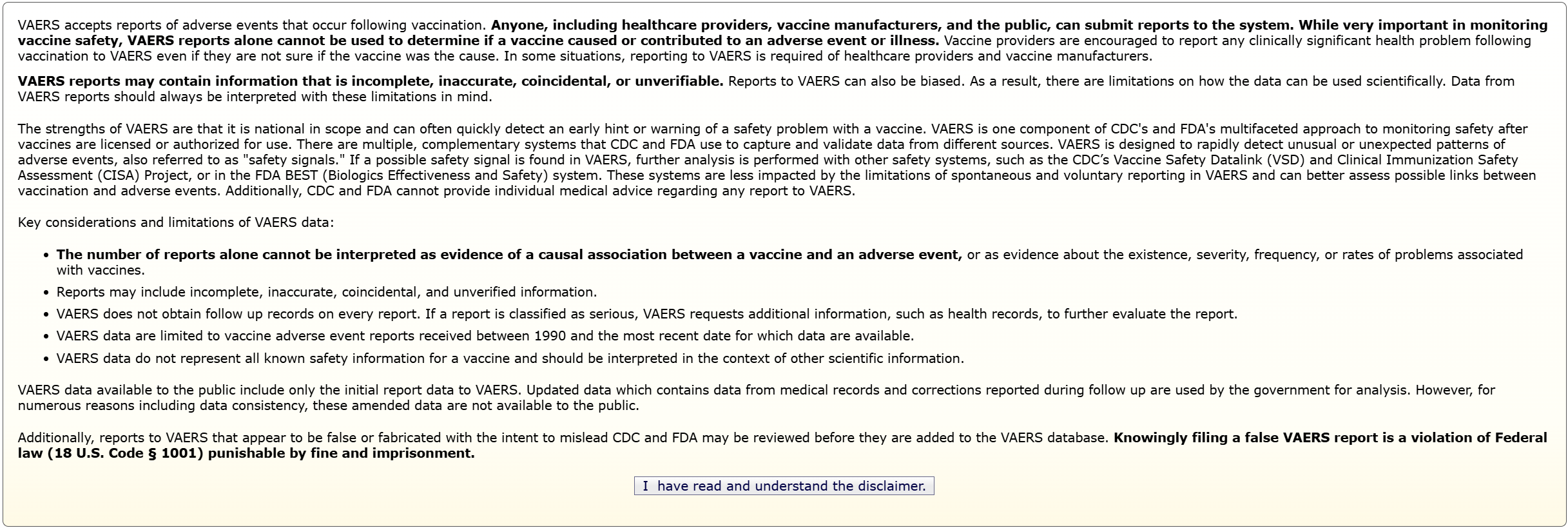
The Vaccine Adverse Event Reporting System (VAERS) was created in 1990 by the CDC and FDA as a passive, open reporting tool designed to detect early safety signals after vaccination. Its purpose is narrow but essential: to flag unusual patterns that may warrant deeper scientific investigation. VAERS helped identify rare cases of vaccine-associated paralytic polio in the 1990s and later contributed to detecting myocarditis following COVID-19 mRNA vaccination - signals that were then rigorously evaluated using more robust systems.
"VAERS is simply a system for people to report bad things that happen to them after vaccination, whether or not those events are caused by the vaccine."
But the very features that make VAERS useful - public accessibility, low reporting barriers, and unverified submissions - also make it vulnerable to misuse. Anyone can file a report, regardless of medical expertise, and the system does not determine whether a vaccine caused the reported event. Reports may include events that occurred days, months, or even years after vaccination, with no demonstrated causal link. This openness is intentional: it ensures that even unlikely or poorly understood events are captured for potential follow-up. Yet it also creates fertile ground for misinterpretation.
During the COVID-19 pandemic, VAERS became a misinformation minefield. Anti-vaccination groups began treating raw VAERS entries as if they were confirmed evidence of vaccine injury. They circulated tallies of reported deaths or complications as though these numbers reflected verified causation, ignoring the system's explicit warning that VAERS data alone cannot establish cause-and-effect. This misuse surged dramatically after the rollout of COVID-19 vaccines, with activists framing normal patterns of reporting as alarming signals.
Some groups went further, creating custom VAERS search tools that stripped away disclaimers and presented reports as "vaccine-caused" incidents. Others promoted the idea of "hot lots" - claims that certain vaccine batches were unusually dangerous - based on flawed logic that failed to account for the simple fact that larger lots generate more reports because more doses are administered. These narratives spread widely on social media, often amplified by prominent anti-vaccine figures and organizations.
The consequences of this distortion are significant. Misuse of VAERS erodes public trust, fuels vaccine hesitancy, and undermines legitimate safety monitoring. It also diverts attention from the system's real function: generating hypotheses that must be tested using controlled, high-quality data sources such as the Vaccine Safety Datalink and the Clinical Immunization Safety Assessment Network. These systems - not VAERS - are where causality is rigorously evaluated.
VAERS remains a vital safeguard, but only when interpreted correctly. Its data are the beginning of scientific inquiry, not the conclusion. The challenge today is not that VAERS is broken, but that its openness has been weaponized - turning a tool designed to protect public health into raw material for misinformation.