Books Worth A Read

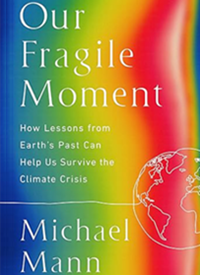
Our Fragile Moment: How Lessons from Earth's Past Can Help Us Survive the Climate Crisis Michael Mann Published: 2024 ISBN-13: 9781541702905 Climate Change Denial Michael Mann's Our Fragile Moment is both a sweeping tour through Earth's climate history and a pointed warning about the narrow window that makes human civilization possible. Mann traces how dramatic shifts - from the drying of the tropics that shaped early hominid evolution to the abrupt Younger Dryas cooling that helped spur agriculture - created opportunities and crises that shaped humanity's trajectory. He emphasizes that while Earth has endured extremes far beyond anything humans have experienced, the stability that allowed civilization to flourish is remarkably delicate. The book's narrative strength lies in showing that past climate upheavals were survivable only because humans adapted - or were lucky enough to benefit from new ecological niches. Today, however, the scale and speed of human-driven warming threaten to push the planet outside the narrow climate envelope in which societies can function. Mann argues that although catastrophic runaway scenarios are unlikely, continued dependence on fossil fuels and the powerful disinformation campaigns protecting that industry remain major obstacles to meaningful action. Ultimately, Our Fragile Moment blends scientific depth with urgency. Mann uses Earth's past not to induce despair but to empower readers: understanding how climate shaped us is essential to ensuring it does not unmake us. | |
Science and Anti-Science Gerald Holton Published: 1998 ISBN-13: 9780674792999 Science General Gerald Holton's Science and Anti-Science examines how scientific knowledge is created, defended, and sometimes rejected within modern culture. Drawing on his dual background as a physicist and historian of science, Holton argues that science is not just a method but a deeply human enterprise shaped by historical context, conceptual commitments, and public values. He introduces the idea of scientific themata - foundational assumptions that guide how scientists think and frame problems - and uses case studies of figures like Einstein, Mach, and Bohr to show how these underlying themes influence scientific breakthroughs. A major thread of the book explores the political and cultural forces that shape scientific authority. Holton highlights episodes such as Thomas Jefferson's debates over federal support for research to illustrate how science has always been entangled with public policy and national priorities. The book culminates in Holton's analysis of the anti-science phenomenon, a diverse set of movements ranging from creationism to pseudoscience to ideological attacks on scientific institutions. Rather than dismissing these outright, Holton examines why they resonate - often reflecting anxieties about modernity, expertise, and social change. | |
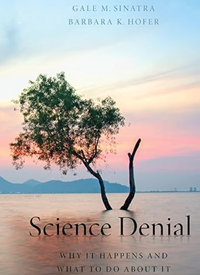
Science Denial: Why It Happens and What to Do About It Gale Sinatra and Barbara Hofer Published: 2021 ISBN-13: 9780197683330 Antiscience How do individuals decide whether to accept human causes of climate change, vaccinate their children against childhood diseases, or practice social distancing during a pandemic? Democracies depend on educated citizens who can make informed decisions for the benefit of their health and well-being, as well as their communities, nations, and planet. Understanding key psychological explanations for science denial and doubt can help provide a means for improving scientific literacy and understanding - critically important at a time when denial has become deadly. In Science Denial: Why It Happens and What to Do About It, the authors identify the problem and why it matters and offer tools for addressing it. This book explains both the importance of science education and its limitations, shows how science communicators may inadvertently contribute to the problem, and explains how the internet and social media foster misinformation and disinformation. The authors focus on key psychological constructs such as reasoning biases, social identity, epistemic cognition, and emotions and attitudes that limit or facilitate public understanding of science, and describe solutions for individuals, educators, science communicators, and policy makers. If you have ever wondered why science denial exists, want to know how to understand your own biases and those of others, and would like to address the problem, this book will provide the insights you are seeking. |