Books Worth A Read

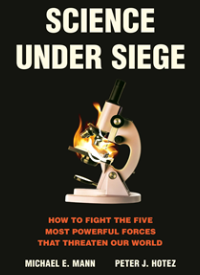
Science Under Siege Michael E. Mann and Peter J. Hotez Published: 2025 ISBN-13: 978-1541705494 Antiscience Michael Mann and Peter Hotez's Science Under Siege reads like a joint dispatch from two scientists who have spent decades on the front lines of humanity's most urgent crises. Mann, a leading climate scientist, and Hotez, a vaccine researcher, trace how the same forces undermining climate action have also fueled resistance to public health measures. Their narrative reveals a shared enemy: a coordinated, politically motivated anti-science movement that distorts evidence, attacks experts, and erodes the public's ability to respond to real-world threats. The book frames this assault through five powerful forces: plutocrats, pros, petrostates, phonies, and the press - each playing a role in amplifying doubt and manufacturing controversy. Mann and Hotez describe how these actors weaponize misinformation, funnel dark money into influence campaigns, and exploit media ecosystems to sow confusion. The result is a society less capable of confronting pandemics, climate change, and other existential challenges. Yet the narrative is not purely bleak. Mann and Hotez write with the urgency of scientists who have endured harassment and disinformation but remain committed to public engagement. Their story becomes a call to arms: a roadmap for dismantling anti‑science forces and rebuilding trust so that evidence, not ideology, guides our collective future. | |
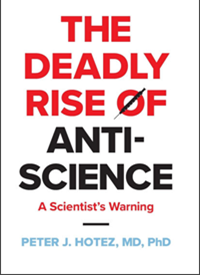
The Deadly Rise of Anti-Science: A Scientist's Warning Dr. Peter Hotez Published: 2023 ISBN-13: 978-1421447223 Vaccines Peter Hotez's The Deadly Rise of Anti-Science reads like a dispatch from a scientist caught in a cultural crossfire. As COVID‑19 spread, Hotez - long respected for developing vaccines for neglected diseases - found himself thrust into public view. His calm explanations on major news networks made him a trusted voice, even as he worked to advance a nonprofit vaccine effort during the crisis. Visibility came with a cost. Hotez recounts how the anti‑vaccine movement, once a scattered fringe, evolved into a politically charged machine amplified by conservative media and elected officials. What began as misinformation hardened into a coordinated campaign that, he argues, contributed to the deaths of more than 200,000 unvaccinated Americans despite the wide availability of vaccines. The book traces this shift with the urgency of someone who has lived through its consequences: harassment, threats, and relentless attempts to undermine his credibility. Hotez places today’s anti‑science rhetoric within a longer history of ideological attacks on scientific institutions, drawing parallels to past regimes that punished researchers for contradicting political narratives. Yet he refuses to surrender to despair. His narrative becomes a call to action - urging scientists to speak publicly, defend evidence, and rebuild trust before anti‑science sentiment becomes an entrenched feature of civic life. | |
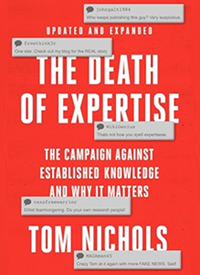
The Death of Expertise Tom Nichols Published: 2025 ISBN-13: 978-0197763827 Science Education Reading The Death of Expertise feels less like absorbing a polemic and more like listening to a weary expert finally say out loud what he has been thinking for years. Tom Nichols writes with the controlled frustration of someone who still believes in knowledge, even as he catalogs how casually society has learned to dismiss it. The book unfolds like a guided walk through a familiar landscape that suddenly looks damaged once someone points out the cracks. Nichols traces how the internet, consumer-style higher education, and an entertainment-driven media ecosystem have flattened the difference between studied judgment and uninformed opinion. What makes the book compelling is not just the argument, but the tone: sharp without being cruel, personal without being indulgent. He admits that experts fail and that arrogance exists within professions, but he rejects the idea that these flaws justify treating all opinions as equal. The narrative builds toward a sobering realization: this isn't merely about hurt feelings or online arguments. Nichols frames the rejection of expertise as a threat to democracy itself, where evidence loses to emotion and confidence outruns competence. Closing the book, the reader is left uneasy - but also reminded that expertise still matters, especially when reality refuses to cooperate with belief. |