Books Worth A Read

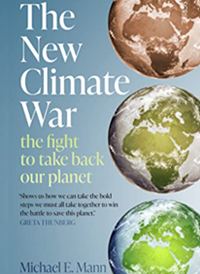
The New Climate War: The Fight to Take Back Our Planet Michael E. Mann Published: 2022 ISBN-13: 978-1541758216 Climate Change Michael Mann's The New Climate War argues that the struggle over climate change has shifted from outright denial to something more insidious: delay, distraction, and division. Fossil?fuel interests, he explains, have largely abandoned the claim that climate change isn't real. Instead, they now promote narratives that shift responsibility onto individuals, sow doubt about solutions, and fracture public resolve. Mann traces how tactics once used by the tobacco industry - manufacturing uncertainty, funding front groups, and attacking scientists - have been repurposed to stall climate action at the moment it is most needed. The book follows this evolving battle across media, politics, and culture. Mann shows how "doomism" convinces people that the problem is already unsolvable, while "deflection" encourages them to obsess over personal purity rather than systemic change. Both serve the same goal: keeping fossil-fuel companies unaccountable. Yet Mann insists the situation is far from hopeless. He highlights the rapid growth of clean energy, the power of collective action, and the importance of resisting narratives designed to make citizens feel powerless or divided. Ultimately, The New Climate War is a call to recognize the psychological and political strategies shaping the climate conversation. Mann argues that by understanding these tactics, people can reclaim agency, push for structural change, and accelerate the transition to a livable future. | |
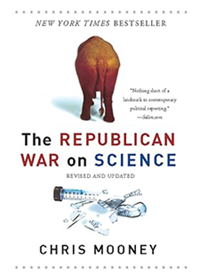
The Republican War on Science Chris Mooney Published: 2007 ISBN-13: 978-0465003860 Antiscience The Republican War on Science examines the relationship between U.S. science policy and partisan politics, focusing primarily on the actions of Republican leadership during the late twentieth and early twenty?first centuries. Mooney argues that, across multiple policy domains, scientific evidence was frequently marginalized when it conflicted with ideological, economic, or religious priorities of political actors, particularly during the George W. Bush administration. Drawing on case studies ranging from climate change and environmental regulation to stem?cell research and sex education, Mooney documents recurring strategies used to challenge scientific consensus. These include emphasizing uncertainty, promoting dissenting experts outside the mainstream, restructuring advisory panels, and reframing political disputes as scientific controversies. Reviews in scientific journals note that the book situates these practices within a longer historical pattern, tracing their roots to earlier industry-funded campaigns that sought to delay regulation by questioning established research. Narratively, Mooney blends investigative reporting with policy analysis, producing a work aimed at both general readers and those interested in science governance. While critics have described the book as overtly polemical, it has been widely cited for articulating concerns about the politicization of science and for stimulating broader discussion about the institutional safeguards needed to preserve scientific integrity in public decision-making. | |
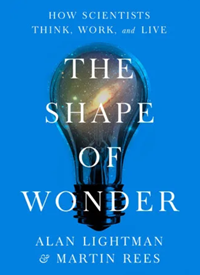
The Shape of Wonder: How Scientists Think, Work, and Live Alan Lightman and Martin Rees Published: 2025 ISBN-13: 978-0593702024 Science General The Shape of Wonder explores how scientists think, work, and live, presenting science not as a collection of facts but as a profoundly human endeavor. Lightman and Rees frame the book around the idea that scientific discovery begins in wonder - the same impulse that drives people to question the world, seek patterns, and imagine possibilities. They trace how this curiosity evolves into disciplined inquiry, showing that scientific progress rarely comes from sudden breakthroughs but from incremental, collaborative effort. The authors weave together portraits of well-known figures like Einstein and Curie with contemporary researchers whose daily routines, anxieties, and motivations reveal the emotional texture of scientific life. These stories highlight the creativity, persistence, and moral responsibility that shape scientific practice, while also acknowledging the pressures of competition, funding, and career uncertainty. The book emphasizes that scientists are multidimensional people whose personal histories - whether shaped by privilege, hardship, or serendipity - inform their work. It also addresses the ethical challenges posed by modern technologies and climate change, arguing that scientific knowledge can be used for good or ill. Ultimately, The Shape of Wonder invites readers to see science as a deeply human pursuit rooted in curiosity, responsibility, and awe. |