How Hype and Celebrity Advice Distort Public Understand

Date: 2026-04-04
Category: Public Trust
Introduction
Public trust in science has always rested on a fragile compact: scientists investigate the world with rigor and humility, and society, in turn, believes that their conclusions are grounded in evidence rather than ideology or personal gain. In recent years, that compact has frayed. Not because science has suddenly become less reliable, but because the ecosystem that translates scientific work for the public-media outlets, influencers, and celebrity personalities - has increasingly rewarded hype over nuance, certainty over caution, and spectacle over substance.
"We know it pays to be mindful of trust because it's much easier to destroy than it is to build back up after it's eroded."
The modern media environment thrives on speed and emotional impact. A preliminary study becomes a "breakthrough", a correlation is framed as a cause, and a single lab result is inflated into a sweeping claim about human health or the fate of the planet. These distortions aren't always malicious; often they stem from the pressures of the attention economy, where headlines must compete for clicks and stories must travel quickly across social platforms. But the effect is the same: the public is repeatedly exposed to exaggerated or oversimplified versions of scientific findings, only to watch those claims later "walked back" when the underlying research evolves. Each cycle of hype followed by correction chips away at confidence, leaving people feeling misled or manipulated.
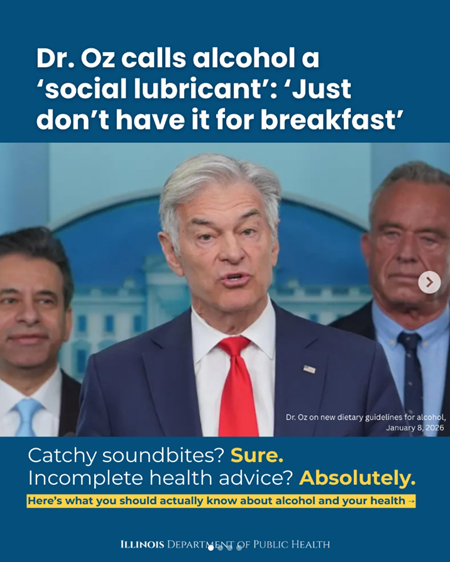
Into this environment step celebrities - figures with enormous cultural influence but little scientific training - who offer advice with the confidence of experts and the reach of global broadcasters. Their messages often blend personal anecdotes, commercial interests, and selective interpretations of scientific language. Because they speak in accessible, emotionally resonant terms, their claims can feel more trustworthy than the careful, qualified statements of actual scientists. When celebrity advice contradicts scientific consensus, many people gravitate toward the simpler, more charismatic narrative. And when that advice later proves wrong, the backlash is rarely directed at the celebrity; instead, it deepens the public's suspicion that "science keeps changing its mind."
The tragedy is that science should change its mind. Revision is a feature, not a flaw. But in a culture conditioned to expect certainty, the natural evolution of scientific understanding is misread as inconsistency or incompetence. The result is a growing mistrust that threatens public health, environmental action, and evidence-based policymaking.
Rebuilding trust requires more than correcting misinformation. It demands a shift in how scientific stories are told - less sensationalism, more transparency, and a willingness to embrace complexity without losing clarity. It also requires a public that understands science not as a source of definitive answers, but as a method for gradually reducing uncertainty. Until then, the gap between scientific reality and public perception will continue to widen, leaving society vulnerable to the loudest voices rather than the most reliable evidence.