How mRNA Vaccines Work

Date: 2026-02-22
Category: Vaccines
Introduction
Messenger RNA (mRNA) vaccines represent one of the most significant scientific breakthroughs of the 21st century, not because they change what vaccines do, but because they change how they do it. Traditional vaccines introduce weakened or inactivated pathogens - or fragments of them - to train the immune system. mRNA vaccines take a more elegant and efficient route: instead of delivering the antigenAn antigen is any substance, typically a protein or polysaccharide found on the surface of bacteria, viruses, fungi, or toxins, that the immune system recognizes as foreign. itself, they deliver the instructions for the body to make it.
"This platform opens the door to faster, more precise vaccine development, for everything from flu and RSV to cancer therapies."
At the core of every mRNA vaccine is a small, synthetic strand of messenger RNA. This molecule mirrors the natural mRNA our cells use every day to build proteins. In the vaccine, the mRNA encodes a harmless piece of a pathogen - often a surface protein that the immune system can easily recognize. For example, COVID-19 mRNA vaccines encode the spike proteinSpike proteins are large, surface-projecting glycoproteins found on enveloped viruses, notably coronaviruses. found on the surface of SARS-CoV-2.
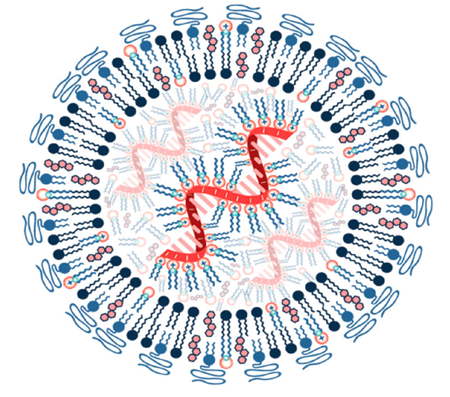
Because naked mRNA is fragile, it is packaged inside lipid nanoparticles - tiny fat-based spheres that protect the mRNA and help it enter human cells. Once injected into muscle tissue, these nanoparticles fuse with nearby cells and release the mRNA into the CytoplasmCytoplasm is the gel-like substance, primarily water, salts, and proteins, filling cells between the membrane and nucleus. It suspends organelles, acts as the site for metabolic processes, supports cell structure via the cytoskeleton, and facilitates intracellular transport.. Importantly, the mRNA never enters the nucleus and cannot alter DNA. The cell's ribosomesRibosomes primary function is to synthesize proteins by translating messenger RNA (mRNA) into polypeptide chains. read the mRNA and begin producing the encoded viral protein, just as they would produce any other protein the body needs.
As the protein accumulates, the immune system recognizes it as foreign. Dendritic cellsDendritic cells (DCs) are specialized, bone marrow-derived immune cells that act as critical messengers between the innate and adaptive immune systems. pick up the protein, break it into fragments, and present those fragments to T-cellsT-cells are critical white blood cells of the adaptive immune system. They identify and destroy infected or cancerous cells and direct the immune response against pathogens.. B cellsB cells are specialized white blood cells and crucial components of the adaptive immune system, responsible for humoral immunity by producing antibodies., meanwhile, learn to produce antibodies that specifically target the protein. This dual activation - of both cellular and humoral immunity - creates a robust defensive
One of the most reassuring aspects of mRNA vaccines is their safety profile. After the protein is made, the mRNA is quickly broken down by normal cellular processes, leaving no lasting trace. The immune system retains only what it needs: the memory of how to fight the pathogen.
This technology's power lies in its adaptability. Because mRNA can be designed rapidly and manufactured without growing viruses or cells, mRNA vaccines can be developed far faster than traditional vaccines. This speed proved critical during the COVID-19 pandemic and now fuels research into vaccines for influenza, HIV, Zika, and even personalized cancer treatments.
In essence, mRNA vaccines transform the body into its own vaccine factory - temporarily, safely, and with remarkable precision. They represent not just a new tool in immunology, but a new way of thinking about how we prepare for disease.